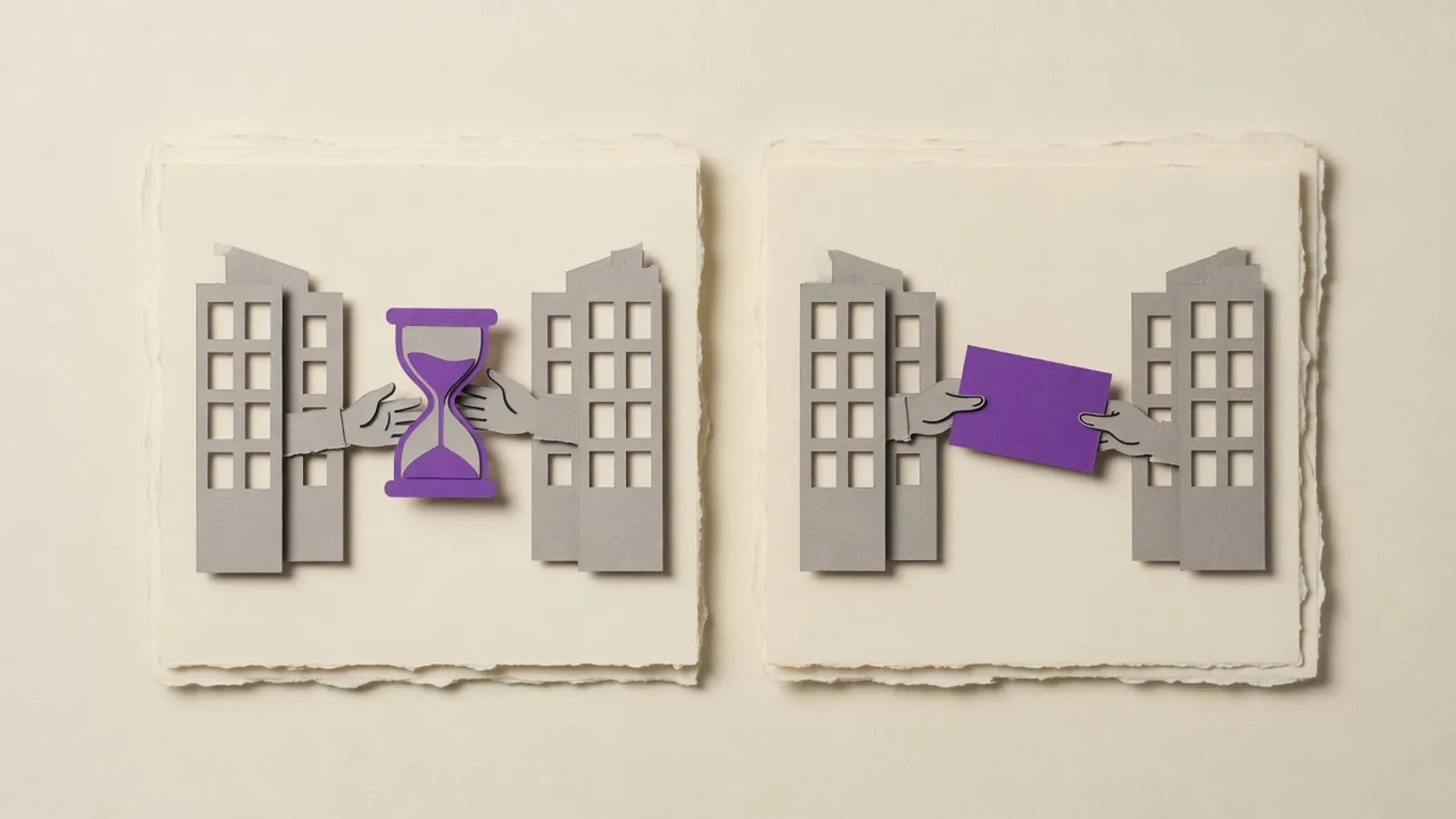
Barter exchanges and hours exchanges both let a service company turn idle team time into something useful without cash, but they differ on the point that matters most: traditional trade exchanges settle in a currency-like unit and bill cash fees on every trade, while an hours exchange such as Hours Network swaps time for time with no commissions.
Two models that look alike
A trade exchange gives you credits for what you sell and lets you spend them with any other member. The IRS describes the tax side plainly: the fair market value of services you receive must be included in income when received, and exchanges report to members on Form 1099-B (IRS Publication 525). The International Reciprocal Trade Association estimates the whole organised-trade industry at $12–14 billion a year, though it notes most operators are private and do not report volume.
The practical difference for an agency is pricing. In a trade-dollar system your hour is worth whatever rate you assign, and you pay a cash fee to convert it. In an hours exchange, one hour of work generates one exchangeable hour regardless of seniority or profession.
Where the incumbents genuinely win
ITEX, Bartercard and IMS Barter have years of operating history and thousands of members. If you want to spend credits on printing, travel, or local goods as well as services, an hours network is the wrong tool. Bartercard’s reported 35,000 cardholders also dwarf any pilot network, and it is the more realistic choice in Australia or the UK.
Where an hours exchange fits
Hours Network targets the opposite problem: a software house with spare developers in a slow month that needs design or accounting hours. Because the network is multilateral, you do not need the company that wants your hours to have what you need. Because listings are anonymous until a match is accepted, you do not announce an empty bench. The cost is maturity: it is a closed founding-member pilot that asks for at least 20 hours of supply and one concrete need.
Where this is heading
Expect more hybrids: credit systems with real clearing, as barter exchanges have always had, but denominated in time rather than money. Whether that takes off depends on liquidity, which is why a pilot’s early supply requirements matter more than its feature list.